Oscar winner, climate crusader and Hollywood's most reliable expiry date. A study in leaving before the 25th birthday cake.
- Subject
- Leonardo DiCaprio
- Filed by
- Trumpery Times Desk, Aug 13, 2025
- Reading time
- 26 min
- Believability
- Under 25

Prologue
Imagine this: you’re cruising through your feed when – once again, of course – there he is once again, another papped photo of Leonardo DiCaprio leaving yet another relationship quicker than Jack jumped ship in Titanic. Why is this man always so reliably unreliable as Hollywood’s leading man?
Hello to Leonardo Wilhelm DiCaprio: the Yank actor with an Italian father who has turned leaving girlfriends on their 25th birthday into a work of art higher than his Oscar-winning performance in The Revenant. This is a man who can convince everyone to believe that he’s about to expire from exposure in a forest teeming with bears, yet somehow seems unable to convince the public that birthdays after 25 are still part of the calendar. It’s like seeing someone perform a Shakespearean monologue but stumble over reading the McDonald’s menu.
Born in 1974 in Los Angeles – after all, where should future Hollywood royalty be born? – DiCaprio has taken thirty years to perfect the art of being both loved while remaining a mystery. A TV star and boyfish face for commercials during Growing Pains, even back then he was a young man foreshadowing his adult commitment issues on the small screen.
Even 1997’s Titanic – the film that launched him into pretty-boy superstardom and a fortune as fat as a small nation’s GDP – couldn’t keep him comfortable for long. But here’s where it gets interesting: once he was crowned the world’s ultimate heartthrob, he started to go stir-crazy and became insanely picky in the process. He began rejecting romantic leads quicker than he dishes out rejections to women who’ve just turned 25.
Take a bow, then, Martin Scorsese, whose career was DiCaprio’s professional lifeline and possibly his only long-lasting successful partnership. Five films together: Gangs of New York, The Aviator, The Departed, Shutter Island, and The Wolf of Wall Street – more than all his relationships put together.
He chased an Oscar for nearly two decades like an actor obsessed: wrestling grizzly bears, leaping headfirst into fantasies, and enduring all kinds of on-screen torture until, in 2016, he finally won. The internet ridiculed his quest before memes were even cool.
And then there’s delicious irony: DiCaprio is an eco-activist, a UN Messenger of Peace who has exhorted leaders to get their acts together when it comes to global warming. Here he is, frequently photographed speeding around on gas-guzzling pleasurecraft with supermodels jetted in from far-flung locations. It’s the rhetorical equivalent of opening a veggie steakhouse – the cognitive dissonance would be strong enough to turn a wind turbine into a jet engine.
His formula for courting became mathematically formulaic enough that bookies probably count on it. The man seeks out relationships like he’s buying a subscription offer that’s about to expire. Not to mention paparazzi shots that occasionally remind everyone he’s merely a regular guy – and that’s why we get nose-picking photos that go viral faster than any movie trailer ever could. This is a man who earns $20 million per picture who’s forgotten that cameras are everywhere now
Recent works with Tarantino (Once Upon a Time in Hollywood), Adam McKay (Don’t Look Up), and another with Scorsese (Killers of the Flower Moon) promise us that his works are a more perfect union than any other. His trophy cabinet glistens with an Oscar, Golden Globes, and hundreds of lesser awards, with films that have made nearly $7.2 billion through the global box office.
So what do we know about Leo? He’s an eco-warrior who’s dedicated his life to saving the planet for the rest of us. A true thespian caught doing less-than-pure things in public. A nearly-50-year-old boy who’s still out dating girls.
But isn’t that gloriously, maddeningly human? DiCaprio acts out the contradictions that we all struggle with, simply on a grander scale, amplified by money and fame. He’s good enough that we can forgive him his faults for two hours, wealthy enough to do as he pleases, and famous enough that we can’t help but stare.
Whether you adore his performances, hate his decisions, or just appreciate the TV show his personal life has become, one thing is certain: DiCaprio has managed to remain relevant in an industry that seems to consume work more readily than he consumes girlfriends.
And is not that the final performance of all?

From Renaissance Namesake to Fake Eco Warrior
Nov 11, 1974: Leonardo DiCaprio was born while his mother was gazing at a Leonardo da Vinci painting in Florence. Coincidence? Or was destiny just chuckling about Hollywood’s ultimate virtue-signaling yacht bro?
And this is the irony: our future eco warrior was christened after Renaissance icon Leonardo da Vinci during a family excursion to an Italian museum. Fifty years down the line, Leo consumes enough fuel to illuminate a microstate. But, of course, he gives first-class environmental talks during his high-seas champagne parties, doesn’t he?
The Bohemian Origin that Gave Birth to Hollywood’s Biggest Hypocrite
George DiCaprio – an underground comix artist (with an X, because ordinary spelling simply wasn’t subversive enough) – and German-born legal secretary Irmelin Indenbirken produced something rather remarkable: a son who would eventually become one of Hollywood’s biggest stars while making a career out of pretending to be everyone else.
George left when Leo was about a year old, having fallen for another woman. Yet this is where the story takes an unexpectedly civilised turn. Rather than descending into the usual divorce melodrama, George and Irmelin pioneered their own version of modern co-parenting. They lived in separate homes connected by a shared yard in Echo Park, allowing young Leonardo to grow up moving freely between both households – a childhood that probably taught him early that even life’s biggest rules were open to creative reinterpretation.
Imagine young Leonardo growing up in this unusual arrangement: two homes, two parents, and very few conventional boundaries. It was the perfect training ground for the man who would later lecture the world about carbon footprints while island-hopping on private jets.
Echo Park: Where Future Oscar Winners Learn Street Smarts
This was not a movie-land childhood. ’80s Echo Park was a tough neighborhood: prostitutes, crime, and violence darkened the neighborhood a darker pitch than any DiCaprio film. Young Leo went to Catholic masses but was exposed to the rougher side of human nature outside the church doors.
School would only be another step he’d leave behind. Los Angeles Center for Enriched Studies, Seeds Elementary, John Marshall High School – all his schools were only another stepping stone to fame. Why study textbooks when you can study scripts?
A Method Actor (and Future Environmental Hypocrite) in the Making
Imagine this: an 11-year-old Leo as a runner-up in a German breakdancing contest. The same child who’d just burst out dancing on stage in performance festivals, winning hearts with sheer unadulterated charisma. He even got the art of performance – insomuch as he didn’t quite get performance art, which is to perform what you practice, but he did get the performance part.
He would be “Lenny Williams.” Lenny Williams! As if Mother Nature ever needed a generic Hollywood nome de guerre for Leo DiCaprio. He refused, retaining the surname that connected him to his creative genius. It was a masterstroke – “Lenny Williams” doesn’t have quite the same ring to it for a man set to be a famous, superyacht-owning environmentalist somehow.
One Hundred Rejects and the Making of a Star
This is where the Leo narrative just isn’t plausible: 100 auditions in eighteen months. One hundred rejection letters. Picture the scene. His underground comix dad telling him to keep at it as casting directors kept brushing him off with the old “thanks, but no thanks” more than ninety-nine times in a row.
And then the breakthrough – not sudden, no earth-shattering, but ads for Matchbox cars and Kraft Singles. Every garish commercial was another rung down rejection’s ladder – but which, ironically, would bring him that much closer to eventual success.
The Early ’90s: The TV Training Ground
“The Outsiders,” “Santa Barbara,” “Parenthood” – Leo observed Joaquin Phoenix’s performances like a smitten student, unpacking each movement. Brilliant performance, he instinctively knew, was about transformation, not replication. This sort of intensity would come in handy later when he shifted from dramatic leading man to environmentalist who casts off all ethical inhibitions during his downtime.
The Irony Legacy
And that’s how you end up with a boy named after a Renaissance genius, conceived during a moment of artistic inspiration in Italy, raised amid the bohemian chaos of Echo Park, and stubborn enough to keep his real name in an industry that happily manufactures new identities for a living.
That same determination carried him through more than a hundred unsuccessful auditions before Hollywood finally took notice. It’s also the quality that fuels his curious modern double life: part Oscar-winning actor, part environmental crusader, part enthusiastic connoisseur of superyachts and private jets. If irony were renewable energy, Leonardo DiCaprio could power half of California.
Perhaps that’s the real masterpiece. The Renaissance Leonardo left behind timeless works of art; the Hollywood Leonardo leaves behind timeless contradictions. After all, who among us hasn’t preached one thing while quietly enjoying the opposite? Most of us simply lack the budget to burn through a year’s worth of fuel over a long weekend in the Mediterranean. At least when Leo embraces the contradiction, he does it with Oscar-worthy conviction and blockbuster production values.
How Rock Bottom Launched Hollywood’s Biggest Comeback Story
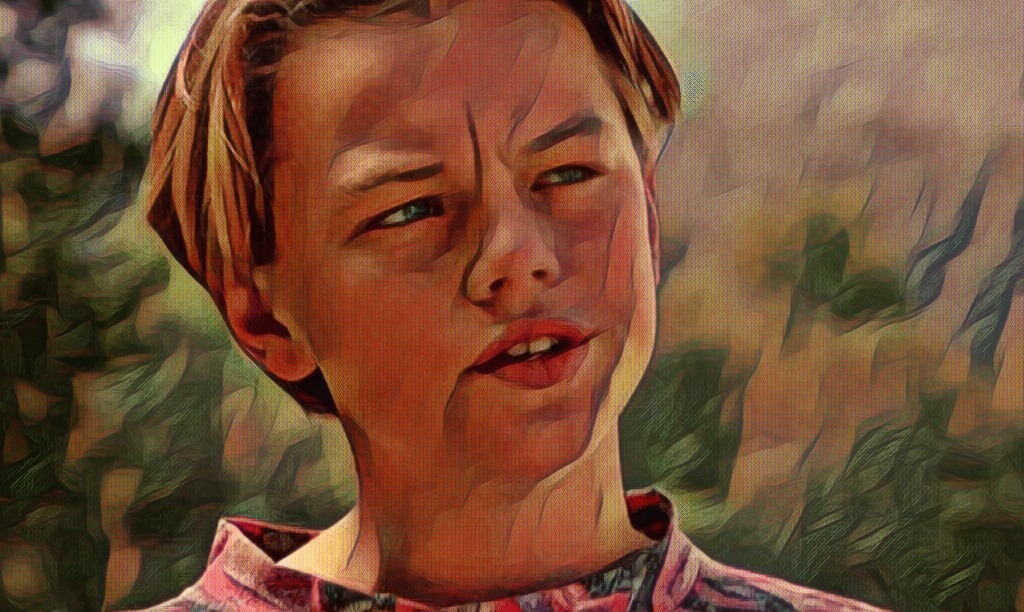
Leonardo DiCaprio: a gaunt, scruffy teenager stepping onto his very first film set. Surely this is where the future Oscar winner begins his ascent to greatness? Not quite. Instead, he found himself in Critters 3, a film so enthusiastically dreadful that DiCaprio himself later called it “perhaps one of the worst movies of all time.”
Every great Hollywood success story has to begin somewhere, and it turns out rock bottom comes with surprisingly good reception.
From Killer Creatures to Family Sitcoms
It was 1991, and the future star was still playing what he later described as “your average, no-depth, standard kid with blond hair.” Hardly the sort of role that screams future cinematic icon, but everyone has to start somewhere.
Soon afterwards, he landed a recurring role as troubled teenager Luke Brower on Growing Pains. On paper, it looked like straightforward family television. In practice, DiCaprio had already developed the mischievous charisma that would become his trademark. Co-star Joanna Kerns remembered him as “particularly bright and boyishly charming for his age.”
Producers undoubtedly hoped his good looks would bring in younger viewers. Instead, they got a teenager who spent much of his downtime winding up the cast between takes. Classic DiCaprio: even before he became one of Hollywood’s biggest stars, he already seemed determined to ignore the industry’s instruction manual.
De Niro Moment that Changed Everything
Fast-forward to 1992. Picture the scene: around 400 hopeful young actors, each practising their Serious Actor face in the bathroom mirror, all chasing the same role. Then Robert De Niro walks in and hand-picks Leonardo DiCaprio.
What did De Niro see that hundreds of others apparently missed? Raw talent hiding behind teenage scruff and quiet confidence.
The film was This Boy’s Life, adapted from Tobias Wolff’s memoir. DiCaprio played Toby, a teenager trapped between his loving mother (Ellen Barkin) and his abusive stepfather, played by De Niro himself. There was just one snag: director Michael Caton-Jones initially found the young actor frustratingly unprofessional.
Instead of replacing him, Caton-Jones took him under his wing, pushing and challenging him rather than showing him the door. It’s a useful reminder that the people who demand the most from you are sometimes the ones most invested in your success.
The gamble paid off. Critics praised the chemistry between Barkin and DiCaprio, while audiences watched a teenage actor suddenly display the confidence and emotional range of someone years older. It wasn’t simply a promising performance—it felt like the arrival of a major talent.
What’s Eating Gilbert Grape: The Performance That Made Hollywood Pay Attention
If This Boy’s Life introduced Leonardo DiCaprio, then What’s Eating Gilbert Grape (1993) announced that he wasn’t just another promising young actor.
Director Lasse Hallström wasn’t immediately convinced. He worried DiCaprio was simply too conventionally handsome to play Arnie, Johnny Depp’s younger brother, who has a developmental disability.
Then came the audition. Hallstrom later described DiCaprio as the most perceptive actor he saw – not because of his appearance, but because of the empathy and instinct he brought to the role.
DiCaprio approached the part with a seriousness uncommon for someone his age. Rather than relying on imitation, he spent time observing young people with similar developmental disabilities, studying how they spoke, moved, and interacted with the world. Hallstrom was so impressed by both the preparation and the sensitivity of his approach that he gave the young actor considerable freedom to shape the character himself.
He was that good that New York Times critic Janet Maslin wrote that he was “at first difficult to watch” – the best praise you can give a performance that crackles with electricity.
From Zero to Oscar Nominee in Two Years
At 19, he was an Oscar nominee, a Globe nominee, and the seventh-youngest ever nominee for Best Supporting Actor. Just think about that career trajectory for a second: from Critters 3 to Oscar nominee in a two-year period. That’s not natural career growth – that’s a meteoric rise that highlighted that we were seeing something truly special being created. DiCaprio had found something fundamental about his work: something about wholesale reinvention, about becoming so thoroughly embedded in a character that you forget, even as you gaze at the screen, that you’re watching Leonardo DiCaprio. And the best part? He’d only just started. Who would have imagined that the star of the worst movie ever made would end up as one of the most famous actors in Hollywood? Sometimes the greatest of stories start with the worst of beginnings.

DiCaprio Nearly Declined the Role That Made Him a Global Icon
Young Leonardo DiCaprio was at a career crossroads, far from Hollyweird: play the sleazy role in Paul Thomas Anderson’s lurid Boogie Nights or come aboard James Cameron’s “unsinkable” fated cruiseliner. We all know which iceberg he ran into, but pay attention to the delicious irony – “DiCaprio nearly passed up Titanic.”
Imagine. The same film that would transform him from TV teen into international sex symbol practically overlooked because Leo was terrified.As in didn’t-win-the-lottery poor, because you wouldn’t even know what winning looked like. Thankfully, James Cameron – a man could talk the real-life passengers of the Titanic back onboard – convinced our self-conscious leading man to take the plunge.
Most Costly Risk in Hollywood History
Costing over $200 million in 1997, Titanic was film’s costliest wager. Cameron actually constructed a duplicate ship in Rosarito, Mexico, because no amount of CGI would be enough to realize his megalomaniacal dreams. The man needed to sink a ship, and he was going to sink one regardless if it was real or fake, even if that meant building an entire ship somewhere off the Mexican coast.
To everyone’s shock, Titanic didn’t just scratch box office records, it smashed through them like an iceberg through a steel ship’s hull. It raked in more than $2.1 billion at international box offices, making DiCaprio no longer a young leading man, but a certified world sensation, an infatuation all his own: “Leo-mania.”
When Teen Idol Status Is A Prison
Leo-mania was not fan worship—it was cultural madness. Picture Beatlemania, only instead of four Liverpudlian chaps, teenage girls all over the world went giddy over one blond Californian who appeared to have stepped straight out of a Renaissance painting. When the Oscars snubbed DiCaprio’s performance, more than 200 fans staged protests against the Academy of Motion Picture Arts and Sciences.
The movie stole the Oscars, winning eleven, including Best Picture. But there he was, DiCaprio, while all the others got glistening statues and he, their newfound love, got none. He got a Golden Globe nod, of course, but after having been a part of making cinema’s greatest disaster-romance flick, didn’t this sting in the slightest?
A Crisis of Overwhelmingly Too Much Success
Three years later, DiCaprio talked about experiencing the kind of existential horror usually reserved for philosophers and overthinking intellectuals: “I have no connection to me through that entire Titanic experience and what my face was to everybody out in the world. I’ll never experience that amount of fame again, and I do not see that.”
There’s something heartbreaking about an actor being so intrinsically linked to portraying a man who dies that he loses track of his own living self. DiCaprio got stuck in the collective consciousness as the heartthrob so good that he could leave women breathless just with his presence alone.
Critics waxed lyrical about the magic that he had instilled in Jack Dawson. Peter Travers, in Rolling Stone, called it DiCaprio’s “best performance yet,” citing how he and Winslet “bring their straight-from-the-heart back-and-forth dialogue so much genuine emotion that you can’t help but be swept up in their star-crossed lovers’ affair.” Vanity Fair declared them “Hollywood’s most iconic screen couple” since Bogart-Bergman.
The Cost of Cinematic Immortality
Yet Hollywood had another fateful twist in store. Titanic’s massive success made DiCaprio the definitive pretty boy for period romances. The fervor that had elevated Leo-mania to its current soaring status as a teenage heartthrob would latch onto him like pesky pap. Noticing that fatal creative trap, DiCaprio deliberately held back, committing “to learn to hear [his] own voice in choosing the roles he’d like to play.” The film that catapulted him as one of the world’s leading actors similarly compelled him to slam on the brakes and redesign his whole career trajectory. Titanic didn’t only sink on screen – it almost pulled DiCaprio’s career down with its own tidal wave of success. The biggest wins can often be the smartest rejections.
When DiCaprio Met Scorsese: A 2000s Love Story in 5 Films
The Great Lightsaber Dodge: Leo Averted the Dark Side
Assume this intergalactic farce: a still-Titanic-drunk Leonardo DiCaprio, basking in his “king of the world” elation, gets a phone call from George Lucas. “You want to be Anakin Skywalker?” A probable answer from Leo was something like the formal Hollywood version of “eat glass first.”
Was this fate? Had Leo somehow looked through a cosmic portal and seen Hayden Christensen delivering the immortal “I don’t like sand” speech with about the same dramatic intensity as a discarded piece of driftwood? Was there some buried Jedi instinct warning him away? A sudden vision flashing before his eyes of himself complaining about coarse, rough, irritating sand while being mentored by an especially grumpy Wookiee?
Year of Redemption: Crisis Turned to Gold
Fast forward to 2002, when DiCaprio was transformed from pretty boy to unchallenged acting talent in “Catch Me If You Can.” Leo played Frank Abagnale Jr., a true-life con man who swindled millions before he was old enough, technically, to have a beer. While all teens were slogging their way through algebra, Frank was creating Pan Am pilot certificates and depositing phony checks like it was nothing.
Spielberg’s shoot was a blur – 147 locations, 52 days, practically three locations per day – “the ultimate adventurer’s film-making experience.” “The most adventurous, super-charged movie-making” he’d ever seen, was how its star, Chris Wedge, described it, in Hollywood lingo “controlled chaos that somehow worked.”
The payoff? A $355 million box office phenomenon on a budget of $52 million. Roger Ebert lauded Leo for shedding his pretty boy image, and Entertainment Weekly critics deemed it his 2018 standout performance, challenging someone to “find a better performance, if you can.” Strong words, but possibly true – it was, after all, a performance bigger than the Titanic itself.
Gangs, Budgets, and Beautiful Disasters
Later that same year, DiCaprio jumped headlong into Scorsese’s “Gangs of New York” as a man jumps headfirst into a rabid den of wolves. Observe how Hollywood math can be: Scorsese had, for years, attempted to secure his pet project, only to be rebuffed with more no’s than your average cold caller gets in a day. Along comes DiCaprio, and bang! Miramax shows up with checkbook in hand.
Isn’t it amazing how the lure of one A-lister can make “absolutely not” “here’s a blank check”? Even for Scorsese! It’s like watching one human being turn water into wine, except the wine costs $103 million and requires a wardrobe of elaborate period dress.
Production was an on-camera disaster waiting to be taped. It was a grotesquely oversized budget like a whirlybird without rotors, producer-director conflicts that likely registered on seismographs, and an eight-month shooting schedule longer even than its actual-world Civil War draft riots. DiCaprio was drawn to Amsterdam Vallon because it was his first “wow, he can really act” film after all those “oh, isn’t he adorable” gigs.
Genesis of a Business Empire
By 2004, the restless DiCaprio emerged from his overpriced cocoon like a butterfly. He started Appian Way Productions, along an ancient Roman road because, somehow, Leo is an even bigger zealot for ancient byways than most people are about pizza.
His raison d’etre was sheer survivability: far too many creative endeavours were killed by committee, death by a thousand managerial “improvements.” Ever been in the room when a committee has to design a horse and ends up with a camel? You may as well watch someone”improve” the Mona Lisa with Crayola.
The Aviator: Defining Grand Madness
His true crowning achievement, though, was in “The Aviator,” where DiCaprio didn’t just play Howard Hughes – he became an obsessive-compulsive pioneer of flight incrementally losing his marbles but inexorably building flying machines. Acting as an obsessive-compulsive flight pioneer wasn’t acting per se, but method acting with a Ph.D. in psychology.
The movie made $213 million on a $110 million budget, and critics finally ceased seeing Leo as a handsome face who happened to find himself on movie sets. The Golden Globe gods finally forgave him, no doubt thinking, “Okay, okay, the kid really is a pretty good actor.”
The Double Feature Craze
And then 2006 arrived – the year DiCaprio proved he could play two powerhouse roles like an over-caffeinated acrobat. “The Departed” cast him as Billy Costigan, living in subterranean survival model, a “24-hour panic attack.” He didn’t rehearse the role sitting in front of a screen, searching for “Boston Irish Mob” – he went to Boston, spent time around the people in the underground, and put on 15 pounds of pure muscle. That’s the type of commitment that makes method actors everywhere cry tears of envy.
But this is where Hollywood politics gets stranger than Kafka: although DiCaprio was in The Departed, Warner Bros. campaigned him for Best Supporting Actor so he wouldn’t split votes with his own Best Actor push for Blood Diamond. Why? Well, naturally, Leo was so good that year he was effectively competing against himself. It’s like being so fast you end up lapping your own shadow.
In the end, though, the strategy failed. The Academy ignored his supporting campaign entirely and nominated him only for Blood Diamond, proving that even Hollywood’s most elaborate game of awards chess doesn’t always end in checkmate.
Blood, Diamonds, and Unmanageable Accents
Blood Diamond cast DiCaprio as a diamond smuggler operating during Sierra Leone’s civil war. His preparation was harder than Navy SEAL school—a six-month stay in Africa, weapons training from real military personnel, and mastering one of the most difficult accents of his career. Try pulling off a Rhodesian accent. Most actors would botch even a straightforward British or Southern American accent, and Leo thought he’d have a crack at one that probably only a handful of people worldwide could confidently judge for authenticity.
Revolutionary Romance and Career Balancing
By 2008, DiCaprio was gliding effortlessly between production responsibilities and leading-man roles like a seasoned professional on steroids. His reunion with Kate Winslet in Revolutionary Road was cinematic poetry – a 1950s marriage falling apart faster than a stale biscuit. DiCaprio described his character as “unheroic” and “slightly cowardly” – a man who lets circumstances completely dictate his life. Peter Travers praised the reunion, while GQ called it “the most mature and memorable performance of his career.” From sketching nude French women aboard the Titanic, that’s impressive growth.
The Moral of This Hollywood Fable
From turning down lightsabers to mastering impossible accents, from launching a production company to working with some of cinema’s greatest directors, DiCaprio’s 2000s read like a career-reinvention manual disguised as a running joke. Who would’ve guessed that saying no to George Lucas would pave the way for so many remarkable performances? Sometimes the best career move is the opportunity you don’t take—even if it disappointed George Lucas and millions of Star Wars fans. Then again, we got Catch Me If You Can instead of Attack of the Clones, so perhaps the Force was with Leo after all.

DiCaprio’s Masochistic Method: Blood, Nightmares, Oscar and Box Office
The Method Acting Masochist
In the 2010s, DiCaprio decided that being obscenely wealthy and critically acclaimed was all well and good but what he actually wanted was a good dose of masochism for good measure. What did he do, then? He dove headlong into parts that quite literally gave him nightmares. Starting with 2010’s Shutter Island, Leo collaborated with Martin Scorsese once more for a psychological thriller that left audiences doubting reality, just like his character, the delusional U.S. Marshal Edward “Teddy” Daniels.
Here’s where things take a wild turn: DiCaprio became so invested in this deranged character that he had real nightmares about massacres. Socializing with friends essentially became his therapy. Imagine having to explain that to your shrink: “So, doc, I spent my waking hours acting like I was crazy, so now Netflix and chill is my escape.”
Critics were split on the twist in the tale, but audiences didn’t care. The film earned $294 million worldwide from an $80 million budget. Not bad for a movie that drove its star to use his friends for psychological therapy.
The Dream Gambler
But Leo was not done flexing just yet. Along came Christopher Nolan’s Inception – a movie so conceptually ambitious that it made viewers feel as though they needed PhDs in theoretical physics. DiCaprio starred as Dom Cobb, an “extractor” who breaks into dreams to pilfer secrets. Since obviously, normal burglary was not cinematically engaging enough nowadays.
This is where DiCaprio proved he’s not just a pretty face with good instincts. He took a massive gamble, cutting his usual $20 million salary and opting for a first dollar gross deal instead. Translation? He bet on himself and the movie’s success, and he took a cut of every ticket sold.
The gamble paid off in a huge way. Inception made $836 million worldwide, and DiCaprio made a cool $50 million by backing himself and the project – his largest payday to date. It was like The Matrix had a baby with Ocean’s Eleven, and Leo was the godfather who cashed in.
The Controversial History Lesson
Then 2011 came along with J. Edgar, in which DiCaprio portrayed FBI director J. Edgar Hoover for director Clint Eastwood. Critics were confused by the film overall, but they couldn’t help but rave about Leo’s subtle work. Roger Ebert praised DiCaprio for being able to tease out elements of Hoover’s personality “possibly even unknown to the man himself.” That’s the sort of praise that will make other actors cry into their cornflakes.
Meanwhile, his production company Appian Way was churning out content. Unfortunately, not everything was gold. Red Riding Hood was named one of 2011’s ten worst films by Time magazine. Ouch. That said, it still earned modest box office returns, which just goes to prove that even critical flops have their fans.
The Bleeding Villain
Then came Django Unchained in 2012, for which Tarantino encouraged DiCaprio to unleash his inner beast as plantation owner Calvin Candie. Although initially apprehensive about the film’s unflinching portrayal of racism, Leo was encouraged by his co-stars and by Tarantino himself not to back down from unpleasant truth. The result? A performance Wired magazine described as “blood-chilling.”
But this is the iconic moment that defines DiCaprio’s dedication: during filming, he cut his hand on glass by mistake but persisted with the scene without dropping character. Tarantino, sensing cinematic gold, left the take in the finished film. That is not just dedication – that’s borderline insanity, and audiences lapped it up.
Django grossed $425 million globally and earned Leo a Golden Globe nomination for Best Supporting Actor. Who knew method acting could be so literally bloody lucrative?
The Fake Environmental Break
In January 2013, DiCaprio said he’d be taking a break from acting to “fly around the world doing good for the environment.” Spoiler alert: his idea of “break” clearly meant producing and starring in two films that year. Classic Leo logic there.
The Great Gatsby saw him portraying F. Scott Fitzgerald’s ill-fated millionaire opposite Carey Mulligan and Tobey Maguire. Critics remained polarized, but DiCaprio’s performance was universally praised and earned the AACTA Award for Best Actor. Rafer Guzman of Newsday called DiCaprio “tough but also vulnerable, touching, funny, a faker, a human” – basically every adjective you’d want to have used to describe your performance.
Matt Zoller Seitz called it “maybe his career best” and “the movie’s finest and most effortless special effect.” The film grossed $353 million worldwide, more than tripling its budget. Not bad for someone who was allegedly on hiatus.
The Wolf of Wall Street
Then DiCaprio teamed up with Scorsese for a fifth time for The Wolf of Wall Street. Portraying real-life stockbroker Jordan Belfort – whose memoir is a textbook in financial excess. Leo had been fixated on the project after reading Belfort’s book. He engaged in a bidding war with Brad Pitt and Paramount Pictures for the rights, since nothing screams dedication like outbidding Brad Pitt. The film showcased DiCaprio’s comedic abilities in what Jonathan Romney labeled “rubber-limbed slapstick” comedy. Todd McCarthy of The Hollywood Reporter praised Leo for a “free-spirited performance” that took the character to its ultimate potential. The film earned him the Golden Globe Award for Best Actor in a Musical or Comedy, as well as Oscar and BAFTA nominations.
The Ruling
By the end of this era, DiCaprio had accomplished something extraordinary: he could make people laugh, cry, doubt their sanity, and open their wallets – sometimes all in the same movie. He went from teen heartthrob to Hollywood’s highest-paid star through sheer force of will, calculated risk-taking, and periodic self-inflicted injuries. Not bad for someone who swore he had to take a hiatus from acting. The man who gave himself nightmares for art had become the actor who made dreams box office gold.
Leonardo DiCaprio: Green Prophet or Just Really Good at Playing Pretend?
From Mega-Yachts to Melting Ice: Leo’s Contradictory Life
What do you get when you combine Hollywood’s biggest heartthrob with a melting iceberg? Leonardo DiCaprio – a man who has somehow succeeded in making the act of saving the world sexier than drawing naked French women on doomed ships. Here is a man who could quite comfortably spend the rest of eternity lounging on opulent mega-yachts, drinking champagne more expensive than your mortgage, and yet he chooses to narrate documentaries about polar bears losing their homes. Is this genuine love for the planet or just the most complicated method acting known to man? Let’s dive into the wonderfully conflicted world where Oscar gold meets environmentalism.
2014: The Year Leo Figured Netflix and Chill Was Not Cutting It
While the rest of us were perfecting the delicate art of binge-watching in our comfortable sweatpants, DiCaprio was busy executive producing “Virunga” – a documentary that follows the brave work of four people fighting to protect the world’s remaining mountain gorillas. For Leo, a relaxing Tuesday, it seems, involves intervening to prevent a species going extinct. The film premiered at Tribeca, and before you could say the words “eco warrior,” our man had picked up a Primetime Emmy nomination. Not bad for a guy who once made us believe love could conquer all despite hypothermia and questionable water-based voyages.
But wait – there’s more! That same year, DiCaprio was also involved in producing “Cowspiracy: The Sustainability Secret.” Before you roll your eyes at yet another celebrity preaching about quinoa, this documentary tackles a truly shocking truth: how your burger might be destroying the planet even faster than your gas-guzzling SUV. And Leo didn’t just sit back – he got involved in the Netflix version, because when you’re passionate about saving the planet, you go all in.
2015: How Far Will Leo Go for an Oscar? (Spoiler: Very Far)
Then came “The Revenant,” finally answering the age-old question: “What’s Leo’s pain threshold when Oscar gold is involved?” The answer? Eating raw bison liver and using animal carcasses as sleeping bags. While we complain about lukewarm coffee, Leo was out there mastering musket shooting, fire-building, and speaking Pawnee. It’s like Bear Grylls had a method-acting baby, and that baby really, really wanted an Academy Award.
Made for the cost of a modest space program ($135 million), the movie grossed $533 million globally. DiCaprio’s acting was praised by critics with the fervor of Black Friday bargain hunters. The movie ultimately won Leo his long-awaited Oscar, as well as BAFTA, Critics’ Choice, Golden Globe, and SAG awards. It just required almost freezing to death and sleeping inside dead animals. Method acting: not for everyone.
Post-Oscar Liberation: When Winning Enables You to Be Yourself
Here’s where it gets even more intriguing. In the years immediately after winning Hollywood’s most coveted prize, DiCaprio devoted himself to making environmental documentaries. In 2016 alone, he executive produced “The Ivory Game” and “Catching the Sun,” and produced, hosted, and narrated “Before the Flood.” Winning the Oscar apparently liberated him to full-on unleash his inner Al Gore – albeit with better hair and a lot more charisma.
Naturally, all was not plain sailing for Leo’s eco-warrior campaign. His production of “Live by Night” was met with reviews so tepid they made elevator music sound exciting. It couldn’t manage to return the $65 million investment. Even eco-warriors have bad days, it would seem.
The Tarantino Detour and the Ultimate Climate Wake-Up Call
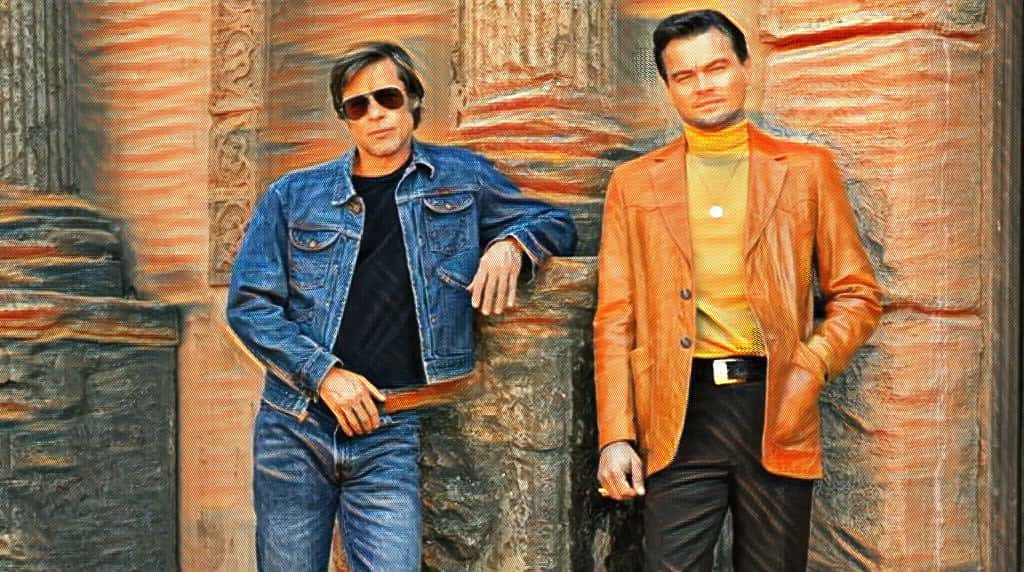
Following the creation of “Ice on Fire” in 2019 – since titling environmental documentaries evidently demands poetic irony – DiCaprio once again took on acting in Tarantino’s “Once Upon a Time in Hollywood.” The movie delves into the companionship between a fading TV star and his stunt double, with DiCaprio drawing upon real-life experiences of observing actor friends encounter professional difficulties in a notoriously unforgiving industry. Nothing quite screams authenticity like a multi-millionaire film star identifying with professional insecurity, right?
DiCaprio’s most overt environmental message, however, arrived with 2021’s “Don’t Look Up.” Following five months of rewriting the script alongside director Adam McKay, Leo appeared as Jennifer Lawrence’s astronomer co-star attempting to alert the world to an extinction-level comet. The film is an inspired metaphor for the collective shrug of society when it comes to tackling climate change – the subject at the forefront of DiCaprio’s environmental crusade.
From Titanic to Environmental Titan: A Celebrity’s Climate Journey
“Don’t Look Up” set Netflix records with 152 million hours viewed in a week, demonstrating that sometimes the most effective way to talk about humanity’s impending, existential doom is through dark comedy and an A-list cast. As DiCaprio said, he’s always on the lookout for environmental projects, but it’s frustratingly difficult because of people’s general reticence to hear inconvenient truths. So what do we do with Leonardo DiCaprio? Here’s a guy who could get by on good looks and charm alone, yet goes out of his way to utilize his platform as a planetary warning system. Whether he’s sleeping in animal carcasses for the sake of artistic integrity or producing documentaries on melting glaciers, Leo has somehow managed to make environmentalism as thrilling as any Hollywood blockbuster. And let’s be real, in a world where celebrities frequently use their power to sell us things we don’t need, having one who genuinely works to save the one we badly need isn’t a bad deal. Prophet or performance artist? Perhaps it doesn’t matter, so long as the message gets through.